
After three decades working inside entrepreneurial companies, I have learned that most startup people problems are not surprising. In fact, they are remarkably predictable.
I have worked with early-stage companies, high growth startups, and organizations trying to scale quickly. No matter the industry, many of the same people mistakes appear again and again.
Not because their founders do not care about culture.
Not because their senior leaders do not value their teams.
- Product must ship.
- Customers must be acquired.
- Investors expect momentum.
- Results override people.
The early days are often focused on survival. Cash flow is the priority. People decisions often become reactive rather than intentional. The irony is that many of the cultural challenges that appear later in a company’s life can be traced back to a handful of early leadership decisions about culture, hiring, structure, and accountability.
I have come to recognize seven toxic people mistakes that show up again and again in startups.
Toxic Mistake #1: Waiting Too Long to Bring in HR
One of the most common patterns I see is founders waiting too long to engage a strategic, senior-level HR professional. Another is recognizing the need only once there is a problem, a crack in the foundation.
- The first harassment complaint.
- An employee threatening legal action.
- Toxic management practices driving turnover.
- The moment the culture begins to fracture, and the Board starts to take notice.
Instead of treating their culture, people, and leadership infrastructure as a strategic priority, many early-stage, first-time founders reduce HR to an administrative or compliance function. Often shaped by careers in large organizations, they either don’t understand what great HR actually does or they’re carrying forward a poor experience with it. Having worked in this field 30 years, those poor experiences with HR are far more common than they should be. For these reasons, they may delay bringing in strong HR leadership until problems become unavoidable.
Early-stage organizations are often focused on the day-to-day, tactical pieces of HR and how to build and scale the team quickly. However, they need strategic guidance on leadership development, organizational design, culture, performance management, and difficult people decisions. A junior HR professional is does not have the skills to advise founders or senior leaders on these complex issues.
When they finally decide to invest in people support, the first instinct is often to hire a recruiter. Recruiters play an important role in helping companies scale hiring. But recruiting and HR are not the same function. Recruiting fills seats. HR builds the systems, leadership capability, and cultural foundation that allow a company to grow in a sustainable way.
It is often assumed that recruiters have expertise in HR and organizational development and design. As a result, roles are often created to support talent acquisition rather than to optimize performance. When organizational structure and design are not thoughtfully defined, the impact is organizations bringing on the wrong people, roles are unclear, accountability breaks down, and pay inequities emerge.
It also places an increasing burden on the founder. Decision making slows because their input is required. Conflicts escalate because their intervention is needed. Priorities and expectations remain unclear because they depend on the founder’s direction.
Toxic Mistake #2: Hiring for Technical Talent Instead of Soft Skills
Many organizations focus their hiring decisions solely on technical expertise. Technical capability matters, especially in the early days when the company is trying to build momentum.
- The best engineer.
- The strongest product thinker.
- The salesperson who can immediately generate revenue.
But one of the most common mistakes I see is hiring almost exclusively for what someone knows rather than how they work and more importantly, with others. Every role requires a specific set of soft skills. Do they need to be collaborative, or be detail-oriented, or adaptable?
- Managers must be able to communicate, coach, and provide feedback.
- Sales leaders must navigate rejection and influence others.
- Product leaders must collaborate and make decisions in ambiguous environments.
Beyond the skills required for the role, there is something equally important. Every organization should define the behavioral attributes that shape the culture. These attributes describe how people communicate, how they handle conflict, how resourceful, resilient, and even how they treat one another. Cultural attributes should not be job specific – they are universally applied across all roles.
When soft skills and cultural attributes are not clearly defined, the hiring process becomes inconsistent. Each manager evaluates candidates through their own lens rather than a shared understanding of how people are expected to show up.
Talent acquisition processes need to be specific and measurable. If I had a nickel for every time I’ve heard leaders say, “he, she, or they were not a culture fit,” I’d have quite a collection. Yet when you ask each person on the hiring team to define “culture fit”, the answers vary widely. It’s neither specific nor measurable. Over time, this creates predictable friction.
There is a phrase that captures this dynamic well that I heard from one of my clients.
People are hired for what they know and fired for who they are.
It might sound harsh, but if you really think about your experience with hiring and terminations, it probably resonates with you. We may have hired the engineer based on their ability to writing code, but have we assessed their ability to influence and collaborate? Both competencies that are absolutely crucial for any engineer to work successfully on a team.
Organizations that scale well are intentional about hiring for both capability and character.
Toxic Mistake #3: The Role Is Based On The Person And Not Organizational Needs.
In the earliest days of a startup it is common to hire known talent.
- Former colleagues.
- Friends.
- Family members.
- People you trust.
As we bring them onboard, we design the role for the person. In the beginning this can work. Trust is high and everyone is willing to do whatever is necessary to move the company forward. At first this feels efficient. Everyone is wearing multiple hats and pitching in wherever they are needed.
But as the company grows the cracks begin to show.
- Roles become unclear.
- Accountability becomes blurry.
- Decision making becomes inconsistent.
Eventually the organization must redesign the structure to support growth. At that point many of those early hires may no longer be the right fit for the roles the company now requires including senior leadership. These conversations can be difficult when loyalty and personal relationships are involved.
As the organization scales, it can create structural challenges. Strong organizations are built intentionally. The process should begin with a clear understanding of what the company is trying to build, starting with defining the business. Next, it is important to plan the strategy and design the organization needed to execute that strategy. Once the structure is clear and the role is defined, only then should the organization determine who is best suited to fill those roles.
Strong organizations are built by finding the right people and putting them in roles where they can be successful.
Toxic Mistake #4: Hiring Fast Instead of Hiring Well
Startups move quickly. Speed is often part of what makes them successful. But when that same urgency drives hiring decisions it can create long-term problems.
One of the most common patterns I see is organizations making very fast hiring decisions because they feel pressure to fill the role. The team is overwhelmed. Deadlines are pressing. Everyone is eager to bring someone in who can help.
In that moment the temptation is strong to hire someone who seems good enough. We ignore the red flags. Leaders might even know the candidate is not quite the right fit. Something feels slightly off during the interviews. There may be concerns about skills or about how the person might work with the team. One person on the hiring team saw the flags, but we ignored their feedback.
But the seat needs to be filled, so the hire is made.
Unfortunately these decisions almost always come back later and at a much higher cost. The reality is that organizations should do the opposite.
Hire slowly and fire quickly!
Every person brought into the organization shapes the culture and performance of the team. When we bring someone on board who proves to be the wrong fit, leaders need to address it quickly.
Too often leaders hold onto toxic or poor fit employees for too long. Sometimes they avoid conflict. Sometimes they are simply too busy to have the difficult conversation. The impact falls on the rest of the team sees what is happening.
Morale declines. Frustration grows. High performers begin to carry the weight of someone who is not contributing in the way the organization needs. Over time it affects how people feel about working in the organization. It can also damage credibility within the management team when leaders appear unwilling to make difficult decisions. It leads to quiet quitting and low psychological safety.
Protecting the health of the team requires leaders to hire diligently and address poor fit sooner rather than later.
Toxic Mistake #5: Promoting People Too Soon or Role Misalignment
Another predictable mistake is promoting strong individual contributors into leadership roles without preparing them for what leadership actually requires. Or putting entry level individuals into roles with big titles before they are ready.
- The best engineer becomes the Engineering Manager.
- The top salesperson becomes the Vice President of Sales.
Technical excellence often driving the promotion decision. Leading people requires an entirely different set of capabilities. Leaders must provide feedback, manage conflict, develop others, and create clarity for their teams. Without these skills even highly talented employees can struggle once they move into management.
When organizations fail to define what it means to be a leader in their organization early-stage, the result is often confusion, frustration, and inconsistent management practices across teams.
Toxic Mistake #6: Avoiding Difficult Feedback on Bad Behavior
One of the most damaging patterns in growing companies is tolerating toxic behavior from perceived high performers. If I’m being honest, this happens in small and large organizations. These are individuals who may deliver strong results, but they create tension with colleagues, undermine trust, or treat others poorly.
- The engineer who is exceptionally technical but can’t work with others.
- The sales leader who meets and exceeds their revenue goals but lacks emotional regulation.
Because their performance appears valuable, their leaders sometimes avoid addressing the behavior. This is particularly difficult because we have not defined it to begin with, so leaders struggle with what they label as the “soft” side of dealing with people matters.
Over time, this sends a powerful signal to the rest of the organization about what behavior is acceptable and often rewarded. When toxic behavior goes unchecked, people lose psychological safety, trust in leadership. and in the culture the organization claims to value.
Strong cultures require leaders who address bad behavior swiftly, regardless of how talented the individual may be.
Toxic Mistake #7: Failing to Define Culture Early
Many founders assume culture will naturally emerge as the company grows. In reality, culture organically forms whether we shape it intentionally or not. Culture is not a set of words written on a wall. It is the set of behaviors leaders model, reward, and tolerate every day. If those expectations are not clearly defined early, culture becomes shaped by the strongest personalities or by behaviors that go unchecked.
By the time organizations try to correct it, the patterns are already deeply embedded. They may have articulated the organizational values, but they are often aspirational. Aspirational values do not reflect who we truly are or how we consistently behave.
Organizational values should be grounded in reality. They should represent the behaviors that are expected and demonstrated every day, not just what we hope them to be. They should serve as an anchor for the organization, guiding decisions, shaping behavior, and providing consistency as the company grows and evolves.
Values should also remain consistent over time, much like our personal values. I have seen organizations try to add or change values in an effort to drive accountability or to focus solely on branding. This approach rarely works.
Effective organizational values are behavior-based. They should be embedded in every aspect of the business, including how we treat customers, how we lead and manage teams, and how we interact with one another.
Shaping culture early is how we put a stamp on it, which allows the organization to scale and sustain it moving forward.
Final Thoughts
The founders who build strong organizations understand that people strategy is business strategy. They invest early in defining culture, building leadership capability, and making thoughtful hiring decisions.
- It is the founder who has just left an executive role to start a new company and reaches out to a senior HR leader for a coffee to explore culture.
- It is the founder who hires a strategic HR leader or fractional consultant as soon as they raise seed funding and begin hiring their first employees.
Because in the end, the success of any organization is determined not just by the product it builds or their go to market strategy. It is driven by the people behind the product and the market who ultimately shape its success.
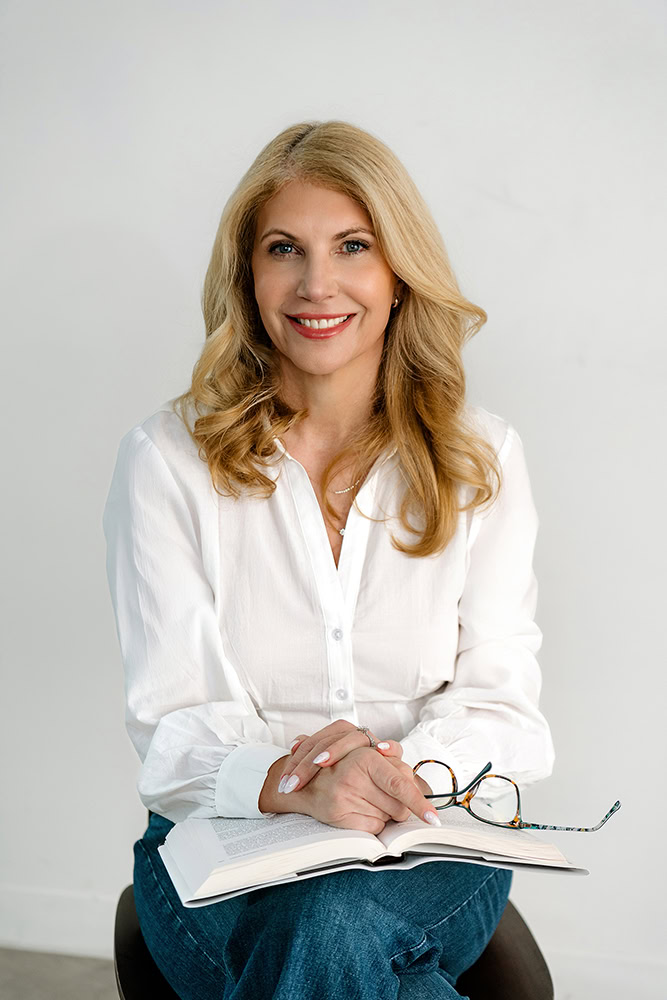 Melanie Vargas is Founder & CEO of Radical Ignition, Inc, executive coaching, fractional CHRO consulting, and leadership development firm. Coaching is a strategic tool she integrates into her consulting work to accelerate executive effectiveness, support succession, and drive meaningful behavior change at scale.
She brings three decades of C-level experience leading people strategies within venture-backed, private equity-backed, and public companies across a variety of industries. She partners with leadership teams and Boards to scale organizations, strengthen leadership capability, design operating models, and build cultures that drive business success.
Interested in our services? Find out more on www.radicalignition.com or reach out: info@radicalignition.com.