September is National Recovery Month.
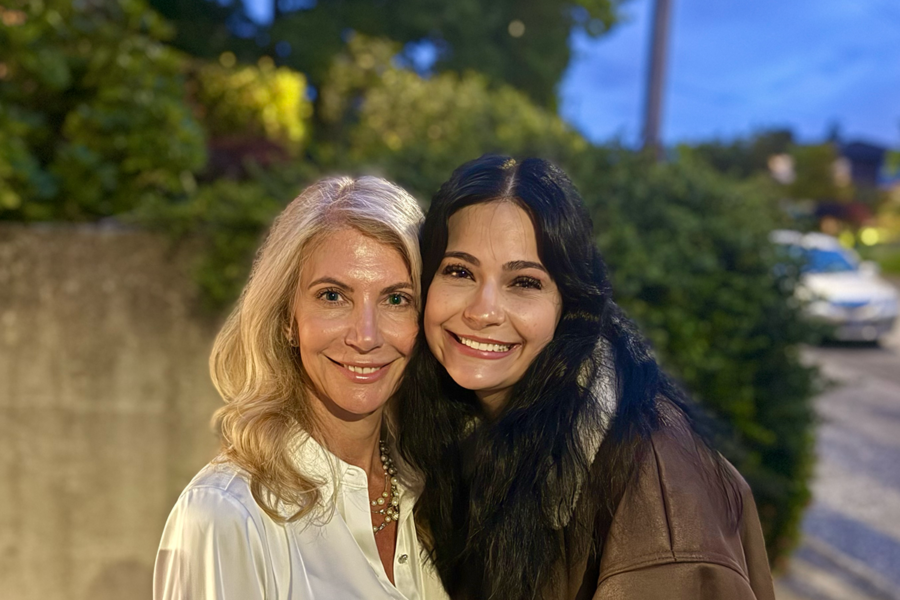
It is also the month of my birthday, or, as we sometimes say in recovery, my “belly button birthday”, September 18. The phrase is a lighthearted way of distinguishing the day we were born from another date that can carry even greater significance in recovery: the day we got sober. More importantly, my beautiful daughter celebrates three years of sobriety on September 20. She was 19-years-old when she found recovery.
For more than 32 years, I have lived my life in recovery from alcoholism. My family knows that January 15 is not just another anniversary on the calendar. It represents the life I was able to build, the family I have been present for, the work I have been able to do, and the person I have had the opportunity to become.
My children have never seen me drink or use drugs. They have never known the version of me who was actively struggling with addiction. They grew up knowing what a sober household looks like. They saw that recovery isn’t something you declare once and move on from. It is something you participate in. Something you protect. Something you continue to practice.
That became even more meaningful when my daughter got sober at such a young age. I cannot take credit for her recovery. Her recovery belongs entirely to her, but she did grow up knowing what recovery looked like. She knew that getting sober did not mean your life was over. She knew people could ask for help. She knew that recovery involved community, honesty, accountability and continuing to show up. She also knew there was no shame in being sober because sobriety had always been part of the fabric of our family. I’m it is profoundly meaning for me that I was able to model that for my kids.
Addiction is a family disease. It affects far more than the person who is drinking or using. It can reshape relationships, trust, parenting, marriages, finances and entire family systems.
But I have also learned over the last 32 years that recovery can ripple through a family too. My husband, who is what we sometimes call a “normie,” has benefited from many of the tools and principles of my recovery program over the years, and I’ve seen those lessons extend far beyond me.
One of the moments I will never forget came on my 20-year sobriety anniversary, when my oldest son, who was just 18 at the time, presented me with my 20-year coin. He told me that he had never known me any other way than sober and then shared all of the ways my sobriety had shaped his life and our family. His words are embedded in my mind forever. That moment reminded me that while my recovery was mine to work for and protect, its impact was never mine alone. It touched my marriage, my children, and the kind of home we built together.
When I got sober in 1994, there was tremendous stigma around addiction. There still is stigma today, but I have watched an important shift. More and more people have shown courage to talk about their addition publicly. Professionals are starting to celebrate their sobriety in their workplaces and on social media. . We’ve watched celebrities share their struggles with addiction and finding recovery. We’re finally recognizing the value of discussing this in the workplace.
Professionally, I was extraordinarily private about my recovery for many years, because of the stigmatism. With a career in Human Resources, I told almost no one at work that I was in recovery unless I happened to learn that they were in recovery too. There was an underlying concern in professional environments that if someone knew you were an alcoholic or had struggled with addiction, they might look at you differently.
Would they question my judgment?
My stability?
My credibility?
My ability to lead?
And then there is another stereotype that persists even today that I have experienced for most of my career. if you don’t drink, you must not be much fun, or you must be a prude. That being sober means you aren’t invited to happy hour or drinks after work. The thinking is either fear that it would temp the alcoholic.
Anyone who has spent much time around people in recovery knows how funny that assumption can be. We laugh and laugh hard. We celebrate. We dance. We stay out late. We connect deeply. We have a lot of fun. I’d say recovering alcoholics often know how to party better than anyone, we just do it sober. Also, no one understands hanging out with drinkers better than a recovering alcoholics.
That stereotype may seem harmless, but in the workplace it can have consequences. If we assume the person who doesn’t drink won’t want to come to the happy hour, client dinner, conference gathering, or holiday party, we can unintentionally exclude them from the relationships and informal networks that are such an important part of working life.
So here’s one very simple suggestion: If you know someone in recovery, invite them to your next happy hour. Don’t assume that because they don’t drink, they don’t want to be there, or that you are protecting them in some way.
Part of dismantling stigma is recognizing just how common substance use disorders are. According to the most recent U.S. National Survey on Drug Use and Health prepared for the Substance Abuse and Mental Health Services Administration (SAMHSA), approximately 44.6 million Americans age 12 and older had a substance use disorder in 2025. That is 15.3% of the population.
The numbers among young people deserve particular attention. Approximately 1.9 million adolescents ages 12–17 had a substance use disorder in 2025. Among young adults ages 18–25, the number was approximately 8.6 million (23.8% of that age group). Nearly one in four young adults.
There is some encouraging news: the prevalence of substance use disorder among adolescents declined from 9.2% in 2021 to 7.4% in 2025. Among young adults, it declined from 26.2% to 23.8% over that same period. I’ve watched a young people’s movement in my recovery community, where there was almost none when I got sober at age 24.
This progress matters, but so does recognizing the scale of what families are dealing with. Behind every one of those statistics is not just the suffering addict, it’s the parents lying awake at night. Brothers and sisters impacted by the destruction. Children growing up around active addiction leading to Complex Post-Traumatic Stress Disorder.
We also need to talk about mental health. I am particularly interested in where the conversation around addiction intersects with the conversation around mental health, because they often go hand-in-hand. Addicts use substances, because they are in pain. The substance takes the pain away. Alcohol and drugs were never my problem, they were my solution. We have made enormous progress in encouraging people to speak more openly about anxiety, depression, ADHD, trauma, and other mental health challenges. We need to do it more, and in the workplace.
Substance use is often still spoken about as though addiction represents a moral failure, rather than a disease, or as though people should simply exercise more willpower. The reality is far more complicated, and mental health and substance use frequently intersect.
One of the things I wish we saw more often is people in long-term recovery sharing some of what recovery has taught us with the broader world. Recovery communities have been practicing tools for decades that have tremendous relevance far beyond addiction:
- Taking personal responsibility
- Asking for help
- Making amends when we cause harm
- Building community
- Learning self-awareness
- Understanding what we can and cannot control
- Sitting with in discomfort with uncomfortable emotions instead of immediately trying to escape them or seek a quick-fix
- Practicing rigorous honesty and starting with ourselves
- Taking life one day at a time, and the many other recovery slogans
- Recognizing that meaningful change happens through consistent practice, not simply good intentions
These are far more than recovery tools. They are human fundamental tools. At a time when so many people are struggling with mental health, loneliness, stress and substance use, I believe there is enormous value in bringing some of that wisdom out of recovery communities and into our families, organizations and broader society.
It doesn’t mean anyone should ever feel obligated to disclose their addiction and recovery. Recovery is deeply personal, and every person should decide for themselves what they want to share, when they want to share it and with whom. For those of us who are comfortable speaking openly, there can be enormous power in doing so.
Addiction is also a workplace issue. Substance use and recovery do not stop when someone walks through the office door or signs into Zoom. The National Safety Council reports that nearly two-thirds of adults with a substance use disorder are in the workforce.
They are your leaders, executives, healthcare professionals, teachers, engineers, HR professionals, entrepreneurs, or business owners. It could be the employee sitting in front of us isn’t personally struggling with addiction at all, but they may be desperately trying to help their child, spouse, parent, friend, or family member who is. They may have spent the previous night searching for a treatment program, sitting in an emergency room, or fearing safety for their loved one. Subsequently, they are at work the next morning and gone straight into a leadership meeting.
I’ve worn these shoes myself far too many times to count. We rarely know everything someone is carrying with them at work or in life. It’s why this article is going on LinkedIn, and why we need to be discussing this inside organizations, with leadership, in board rooms, and in our communities.
Good employers make it possible for someone to ask for help before they reach a crisis. Here are some options:
- Behavioral-health and substance-use treatment benefits
- Confidential Employee Assistance Programs
- Teaching managers what to look for and how to respond appropriately when someone asks for help
- Thoughtful leave and accommodation practices
- Policies that focus on safety and performance rather than shame
- Creating workplace cultures that doesn’t require alcohol to participate socially
And after spending most of my adult life and my professional career sober, perhaps the most important lesson recovery has reinforced for me is this:
People are capable of profound change.
I have watched it happen with the leaders I have been honored to coach.
I have watched it happen in recovery rooms.
I have watched it happen inside organizations.
I have watched it happen in families and in mine.
I have watched it happen in my own life.
And I have watched it happen in my daughter’s life. Her recovery belongs to her. As her mother, I am profoundly grateful that when she needed to find her own path to sobriety, recovery was not a foreign concept in our home.
On September 18, I’ll celebrate my belly button birthday and another trip around the sun. On September 20, I’ll be celebrating an even more important birthday, the sobriety birthday for my daughter. Happy Birthday, Emily. It’s been a joy watching your transformation. I love you.
January 15, 1994 is the day I began building the life my children would eventually know. Thirty-two years later, I am most grateful that my children have never had to know me in active addiction. When addiction touched the next generation of our family, recovery was already part of our family system.
Addiction has permeated our family, but it doesn’t define us. Recovery is our family legacy too. During National Recovery Month, I hope we continue making it safer for people to talk about both sides of this story: the very real devastation addiction can cause and the extraordinary possibility that recovery brings.
 Melanie Vargas is Founder & CEO of Radical Ignition, Inc. and Executive Director and Podcast Host of What’s In Your Neighborhood. She brings three decades of C-level experience coaching leaders, leading people strategies within venture-backed, private equity-backed, and public companies across a variety of industries. She partners with leadership teams and Boards to scale organizations, strengthen leadership capability, design operating models, and build cultures that drive business success.
Interested in our services? Find out more on www.radicalignition.com or www.whatsinyourneighborhood.org.