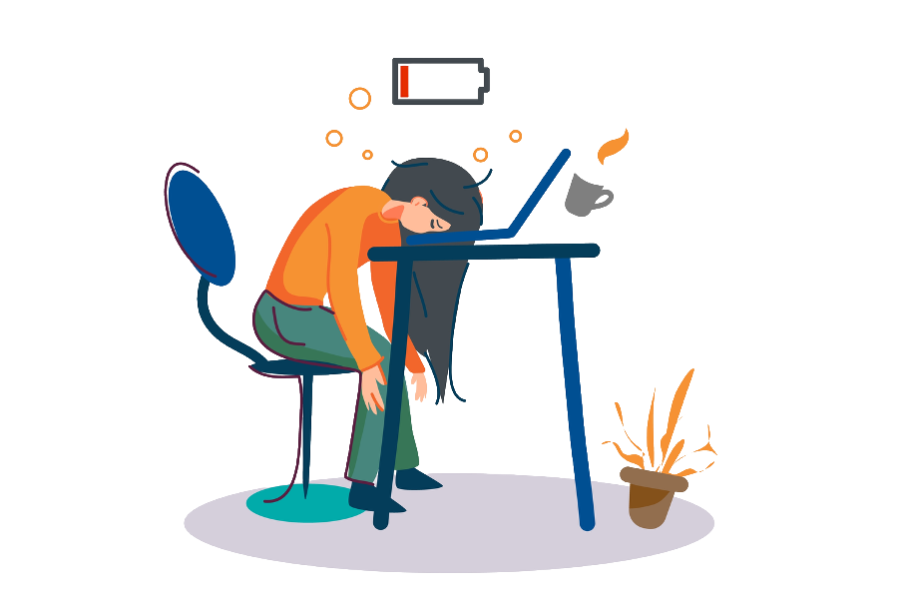
A few years ago, Adam Grant gave language to something many of us were quietly experiencing: languishing.
Not depressed.
Not burned out.
Just flat.
When I first heard him describe it, I remember thinking, Yes. That is it. I could finally name the feeling. Life was moving, I was functioning, but something essential felt muted and unsettled.
Languishing lives in the space between suffering and flourishing. You are showing up, checking the boxes, doing what needs to be done, but days blur together. Motivation wanes. Even things you care about take more effort than they should.
Lately, I have noticed that same feeling creeping back in. Only this time, it feels worse. It feels heavier and more entrenched. It also feels harder to shake with a sense of impending doom.
A Quick Revisit: What Languishing Actually Is
In his TED Talk, Adam Grant describes languishing as a state of stagnation and emptiness rather than despair. One of the most important ideas he offers is that languishing is marked by a loss of flow. Flow refers to those moments of deep absorption where time disappears and meaning quietly accumulates.
During the pandemic, flow was disrupted everywhere. Our work blurred into our home life, and our boundaries collapsed. Our days became indistinguishable.
Because languishing is not acute or dramatic, it often went unnamed. Many of us minimized how we were feeling.
I should be grateful
Others have it worse
This will pass
Naming it helped. It helped me then. But naming alone has not been enough now.
Why This Season Feels Harder Now
What is different today is not just the presence of languishing, but what is layered on top of it:
- Chronic uncertainty rather than a single crisis
- Accumulated grief rather than acute loss
- Decision fatigue without meaningful recovery
- Eroding trust in systems, institutions, and leadership
- Pressure to be back to normal when nothing actually feels normal
During the Pandemic, there was a shared narrative. Now the stress is diffuse, ongoing, and largely invisible. For leaders especially, there is an added burden. You are expected to step up, execute, and produce results. Meanwhile, you may be quietly questioning your own sense of meaning, impact, and direction.
This is not a motivation problem.
It is not a resilience failure.
And it is not something you fix by trying harder.
The Subtle Shift That Matters Most
If languishing taught us anything, it is this. The opposite of languishing is not happiness. It is agency and this is what it looks like:
- Having some control over how you spend your energy
- Experiencing progress, even in small ways
- Engaging in work that gives something back, not just demands more
- Reconnecting with what feels alive, not just productive
This is why self-care and self-compassion often falls flat right now. What many of us are craving is not rest alone. It is meaningful friction. Effort that leads somewhere. Challenge that feels purposeful. Conversations that matter.
What Actually Helps and What Does Not
What does not help:
- More optimization
- More productivity hacks
- More pressure to reframe everything positively
- Gaslighting yourself into gratitude
- Comparison
What does help:
- Designing days with one or two moments of absorption
- Creating small, visible wins instead of chasing big transformations
- Reclaiming choice, even in constrained environments
- Naming the fatigue without judging it
- Letting go of the idea that you should be over this by now
- Practicing gratitude and acceptance (with realizing that gratitude and difficulty can coexist)
Languishing was never a personal failing. Realizing you are feeling it again is not a failure either. It is a quiet, signal that something in how we are living and working needs to change. During the Pandemic we were overly focused on building resilience and on learning how to bounce back. Today’s season is about reorienting toward meaning, agency, acceptance, adaptability, and aliveness. More importantly, making one intentional choice at a time.
 Melanie is Founder & CEO of Radical Ignition, Inc. and draws from 30 years of C-level experience in human resources/organizational development, executive coaching, and consulting experience working across a broad range of industries. She is a self-proclaimed “hyper-achiever in recovery” who thrives in complexity, reinvention, and real talk. Her career has been shaped by startups, shakeups, and a deep personal understanding of adversity. She leans into that lived experience as her lens, and to help leaders confront the hard questions, embrace ambiguity, and find the boldest version of themselves.
To learn more about our consulting, coaching or leadership programs, reach out to us at info@radicalignition.com!